
Glass Bottle Manufacturing Process | IS Machine & Press Molding - FOYAGLASS
In the dynamic field of glass packaging, having a clear understanding of the production process is essential for businesses seeking top – notch glass bottles. As a leading foreign – trade company specializing in glass packaging, we are delighted to guide you through the in – depth journey of glass bottle production, with a focus on the two key machines we rely on: the IS machine (Individual Section Machine) and the press machine.
1. Raw Material Preparation
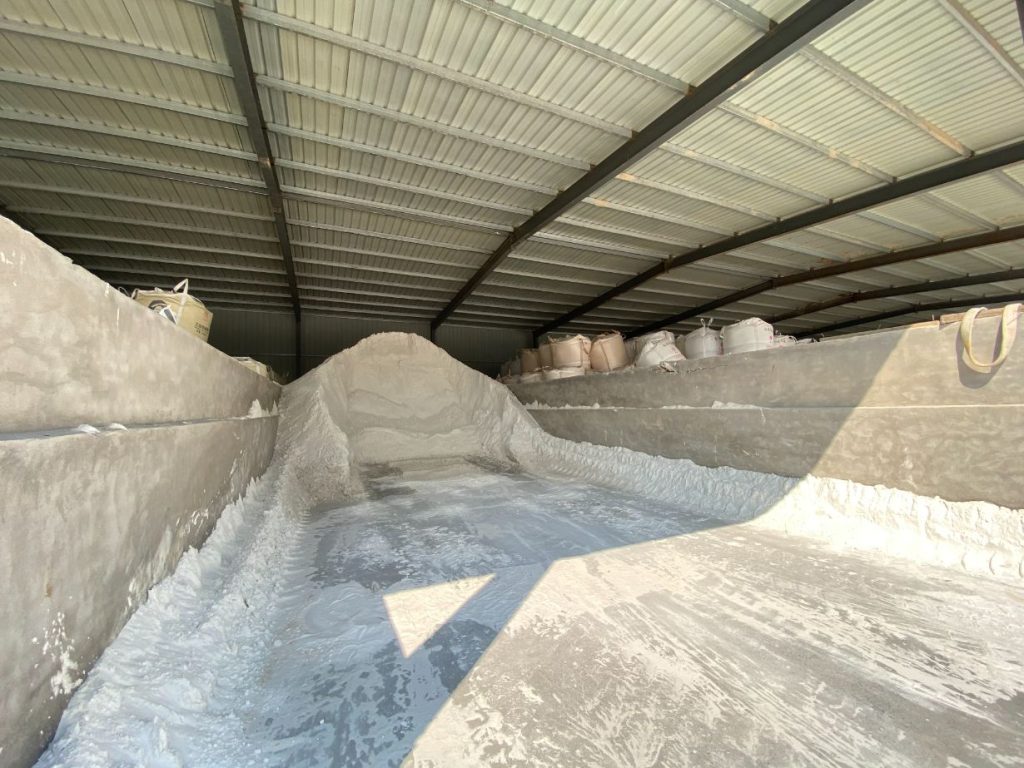
Our production commences with the meticulous selection of raw materials. Silica sand, the cornerstone of glass, offers the fundamental structure. It typically appears white or light – colored, boasting a granular texture. Soda ash is added to significantly lower the melting point of the sand, which is vital for energy – efficient production. Limestone acts as a stabilizer, enhancing the durability and chemical resistance of the final product. These raw materials are precisely measured and thoroughly blended in specific ratios to ensure the consistent quality of each batch of glass bottles.
2. Melting: The First Crucial Step
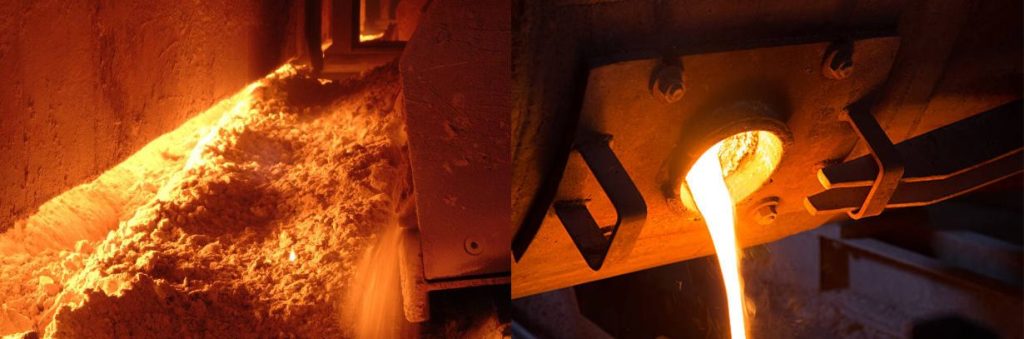
The transformation of raw materials into molten glass is where the magic of bottle manufacturing begins. At FOYAGLASS, this critical phase occurs in our state-of-the-art regenerative furnaces operating at temperatures exceeding 1,500°C (2,732°F).
Precision Material Blending
Our process starts with a meticulously calibrated mixture of:
-
Silica sand (70-75%): Forms the glass matrix
-
Soda ash (12-15%): Lowers melting temperature
-
Limestone (10-12%): Enhances durability
-
Recycled cullet (20-30%): Sustainable production
The Melting Process
-
Charging: Automated feeders deliver batch materials into the furnace
-
Primary Melting: Materials liquefy within the furnace’s hot zone
-
Refining: Molten glass maintains at 1,600°C for 24-48 hours to:
-
Remove gas bubbles (fining)
-
Achieve perfect homogeneity
-
Reach optimal working viscosity
-
3. Molding with IS Machine (Individual Section Machine)
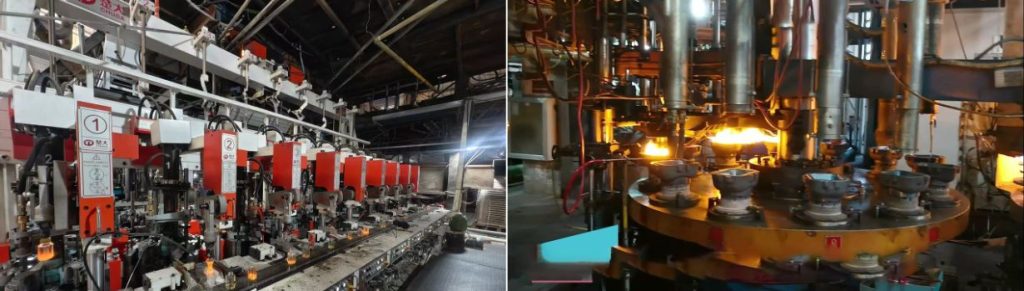
The IS machine, also known as the 行列机 in Chinese, is a workhorse in the glass bottle production process. It operates based on the principle of sequential production in individual sections. Each section of the machine is responsible for a specific stage of the bottle – making process. In the IS machine, molten glass is precisely delivered to each section. The process often involves a combination of gravity – fed and mechanically – assisted methods to ensure accurate placement of the glass. This machine is highly efficient for high – volume production, capable of producing a large number of glass bottles with consistent quality in a short time. It is particularly suitable for manufacturing standard – shaped glass bottles, such as those for beverages and common household products.
* Working Process of IS Machine
- Gob Formation: Molten glass is first formed into a “gob,” which is a precisely measured mass of glass. The size and shape of the gob are carefully controlled to ensure the proper formation of the bottle.
- Parison Formation: The gob is then transferred to a mold where it is shaped into a parison, which is a pre – form of the final bottle. This is often achieved through a combination of pressing and blowing actions.
- Final Shaping: The parison is further shaped into the final bottle shape by blowing air into it while it is in the final mold. The air pressure forces the glass to conform to the shape of the mold, creating the desired bottle shape.
* Molding with Press Machine
The press machine, or 压机 in Chinese, plays a crucial role in producing glass bottles with specific requirements. It is mainly used for creating glass bottles with more complex shapes, thicker walls, or higher precision. In the press – molding process, molten glass is placed into a mold cavity. A plunger then presses the glass, forcing it to take the shape of the mold. This method is especially effective for producing bottles with detailed designs, such as decorative glass bottles or those for high – end products. The press machine allows for greater control over the thickness and shape of the glass bottle, ensuring that the final product meets the exact specifications.
- Working Process of Press Machine
- Glass Placement: Molten glass is carefully placed into the lower half of the mold.
- Pressing: The upper half of the mold, equipped with a plunger, descends and presses the glass. The pressure applied by the plunger forces the glass to fill every detail of the mold cavity.
- Ejection: Once the glass has cooled and solidified to a certain extent, the bottle is ejected from the mold, ready for further processing.
4. Annealing: Ensuring Durability
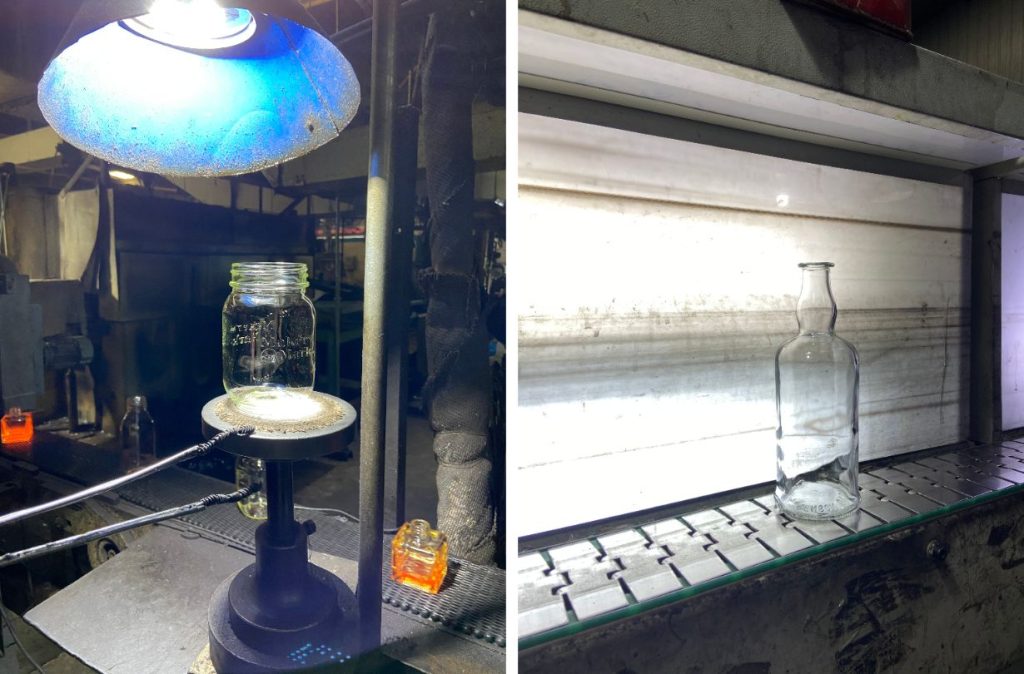
After molding, whether by the IS machine or the press machine, the glass bottles are still hot and brittle. Annealing is the next essential step. The bottles are slowly cooled in a controlled environment, usually in an annealing lehr. This gradual cooling process alleviates the internal stresses within the glass, preventing it from cracking or shattering due to thermal stress. The annealing temperature and time are meticulously controlled to ensure the glass bottles have the optimal mechanical properties and durability.
5. Quality Control: Upholding High Standards
QC is an integral part of our production process. From the inspection of raw materials to the scrutiny of the final product, strict quality checks are carried out at every stage. Visual inspections are conducted to detect any defects such as cracks, bubbles, or uneven surfaces. Mechanical tests are also performed to ensure that the bottles can withstand the required pressure and handling. Additionally, chemical analysis may be carried out to verify the composition of the glass and its compliance with international quality standards.
At our company, we take pride in our state – of – the – art production facilities, which are equipped with advanced IS machines and press machines. Our team of highly skilled professionals is dedicated to producing glass bottles that not only meet but exceed our customers’ expectations. If you have any questions or need more information about our glass bottle production process or our products, please feel free to contact us through our website.